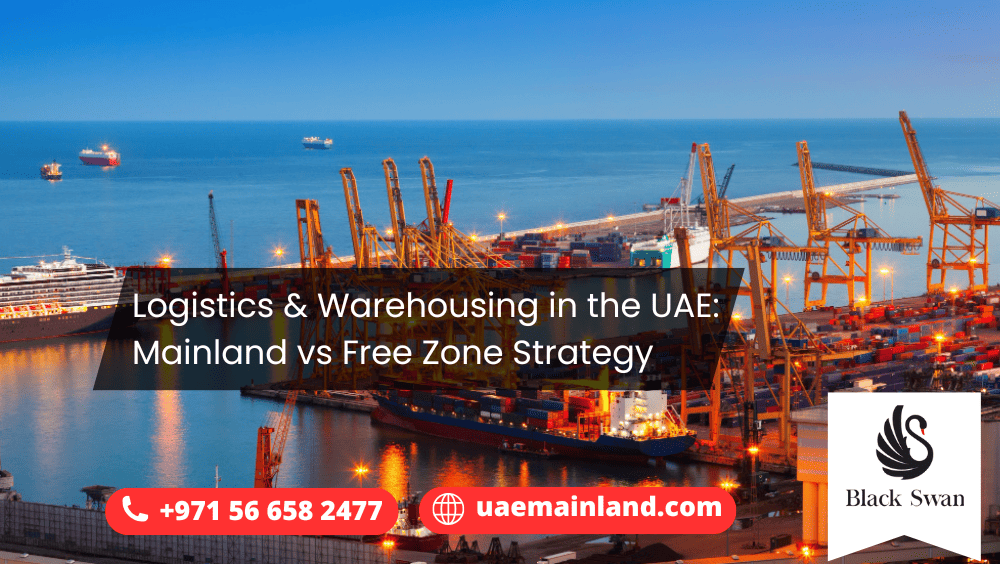
The UAE sits at the crossroads of Asia, Europe and Africa, which is a fancy way of saying your containers and air cargo can hop continents in hours, not days. With mega ports like Jebel Ali and world-class airports, the country has turned speed into a business model. If your supply chain needs short transit times and predictable service levels, this is home base.
Mainland vs Free Zone: What’s the Real Difference?
Think of Mainland as the onshore economy—perfect for trading directly inside the UAE with shops, government buyers and end consumers. Free Zones operate like customs-controlled ecosystems: brilliant for import, light processing and re-export across the GCC and beyond. Your call depends on where your customers are and how your goods flow. Get details about Business Setup in Dubai.
Mainland Warehousing Basics: Selling Onshore Made Simple
A Mainland licence (issued by each Emirate’s economic department) lets you warehouse and sell across the UAE without the extra layers of customs movement between zones. If your primary revenue is local B2B or retail supply, this is the cleanest route. It also lines up nicely with marketplace deliveries, government tenders and long-term contracts with large UAE organisations.
Free Zone Warehousing Basics: Re-Export and Flexibility
Free Zones—JAFZA, KIZAD, DAFZA, Dubai South, RAKEZ and friends—specialise in import, value-add and re-export. You can store foreign goods in a bonded environment (no customs duty while stock sits inside), then ship out to other countries or into the Mainland when orders drop. For regional distribution hubs and multi-country SKUs, that flexibility is gold.
Customs & Duty Flow: Bonded vs Non-Bonded Explained
On the Mainland, goods cleared into the country attract customs duty upfront (where applicable). In a Free Zone, you defer that duty until cargo enters the UAE’s onshore market—or you avoid it entirely if you re-export. If your stock turns over regionally, that deferment can boost cash flow and keep working capital happier. Looking to Start a Logistics Company in Dubai?
VAT & Invoicing: Keep the Paper Trail Tidy
Yes, VAT complexity is a thing. Onshore transactions are typically within the UAE VAT net, while many Free Zone flows hinge on the customer’s location and the final destination. Keep your invoicing rules straight—sale to Mainland, export outside the UAE, or Free Zone-to-Free Zone—and you’ll avoid headaches. A tight tax workflow is as important as your pick-pack accuracy.
Corporate Structuring: The Tax & Substance Angle
Plenty of Free Zones offer attractive frameworks for qualifying activities, provided you meet substance and compliance requirements. Mainland entities, meanwhile, give you broad commercial freedom for onshore trade. Whichever you pick, plan governance early—board, management and genuine operations—not as an afterthought when banks or auditors ask the awkward questions.
E-Commerce Fulfilment: Where Speed Meets SLA
If you’re chasing same-day or next-day deliveries across Dubai, Abu Dhabi and Sharjah, Mainland warehousing combined with strong last-mile partners can be your rocket fuel. That said, some Free Zones sit practically next door to ports, airports and urban centres, so you can still achieve aggressive SLAs—especially if most inbound cartons arrive by air or sea in bulk.
B2B Distribution & GCC Re-Export: Free Zone Advantage
Shipping pallets to Saudi, Oman, Bahrain or East Africa? A Free Zone hub makes routing and compliance cleaner. You keep goods in bond, consolidate multicountry orders and re-label without touching onshore duty. It’s a leaner model for high-mix, regional B2B with rolling forecasts and frequent schedule changes.
Mainland Strength: Direct Retail & Government Supply
Selling to supermarkets, pharmacies, hardware chains or ministries? Mainland wins for frictionless onshore procurement, quicker GRN and smoother compliance with local buyers vendor setups. If 70%+ of your revenue is inside the UAE, the simplicity of Mainland invoicing and deliveries often outweighs the customs perks of a Free Zone. Get details about Company Formation in UAE.
Cost Picture: Warehouse Rent, Labour & Utilities
Warehouse rates vary wildly by Emirate, build spec and proximity to ports. Free Zones sometimes offer long-term packages and utility efficiencies, while Mainland warehouses may be closer to dense delivery zones—saving you on fuel and driver hours. Run TCO, not just rent: add transport, staffing, racking, MHE, insurance and tech subscriptions.
Time to Set Up: Licenses, Approvals and Go-Live
Free Zones are famous for speed—one-stop desks, integrated customs and friendly processes. Mainland can be just as quick when you have a good PRO and a landlord who knows the drill. Either way, parallel-path the big items: license, lease, fit-out permits, IT and 3PL contracts. A month saved at set-up is a month gained on revenue.
Inventory Models: Bulk, Cross-Dock or Pick-Pack
Bulk storage suits slow-moving or seasonal items; cross-dock is perfect for fast transit cargo with minimal dwell; pick-pack is your e-commerce workhorse. Free Zones excel at cross-border cross-dock and postponement (labelling, kitting). Mainland shines when you’re feeding dense onshore order lines all day, every day.
3PL vs In-House: Buy Speed or Build Control
A UAE-savvy 3PL can give you capacity, WMS, transport, customs brokerage and labour flexibility from day one. In-house warehousing give you more control over SOP and branding but means higher up-front capex and management overhead. A hybrid—3PL for start-up, phased insourcing later often hits the sweet spot. Looking for a Business Setup in Dubai Mainland?
Compliance & EHS: Keep It Safe, Keep It Legal
Whether Mainland or Free Zone, expect inspections covering fire systems, racking load tags, MHE training, chemical storage (if relevant) and hygiene. Document your SOPs, log incidents and keep MSDS where needed. A compliant shed is not just about passing audits; it’s about avoiding downtime when you least can afford it.
Sector Nuances: Cold Chain, Pharma and High Value
Cold and pharma need temperature mapping, validated equipment and alarmed monitoring. High-value items benefit from controlled cages, CCTV coverage and access logs. Free Zones close to air cargo can shave hours off your cold chain; Mainland can reduce the last-mile risk window. Match the facility spec to the SKU, not the other way round.
When Mainland Wins: The Onshore-First Checklist
Choose Mainland if most orders are local, your buyers require onshore invoices, you run frequent store replenishment or you need free movement between Emirates without zone-to-zone customs formalities. Add in government procurement or VMI models and the case becomes even stronger.
When Free Zone Wins: The Regional-Hub Checklist
Pick a Free Zone if you import high volumes, defer duty helps your cash flow, you re-export a big chunk of stock or you want rapid air-sea multimodal connections. If you frequently relabel, kit or customise for different countries, the zone’s bonded status and customs efficiency can save your week—every week.
The Hybrid Play: Onshore + Free Zone for the Win
Plenty of brands run a Free Zone DC for global inbound and regional re-export, plus a lean Mainland node for local fulfilment. You can mirror SKUs or position only fast movers onshore. It’s a neat way to hedge duty, shorten the last mile and keep customers happy in both arenas. Get details about Company Formation in Abu Dhabi Mainland.
Technology Stack: WMS, Visibility and Billing Logic
Don’t wing it. A good WMS with ASN, batch/serial capture, wave picking and courier integrations is non-negotiable. Add inventory dashboards with ETA and SLA alerts. Most importantly, configure billing logic for bonded vs non-bonded moves, re-exports and onshore deliveries so finance isn’t untangling spaghetti every month-end.
Site Selection: A Quick, No-Nonsense Checklist
Shortlist sites by distance to port/airport, truck curfews, trailer turning circles, clear height, floor loading, sprinkler type and office ratio. Check bus access for staff, power availability for cold rooms, rooftop solar potential and fibre connectivity. Walk the yard at peak hour; traffic tells the truth.
Sustainability Edge: Cutting Waste Without Killing Margin
LED lighting, motion sensors, solar rooftops and right-sized packaging drop your utilities and waste costs. Route optimization reduces empty miles. It’s not just planet talk—buyers increasingly prefer suppliers who can prove greener ops. Keep a simple scorecard and improve quarter by quarter.
Related Articles:
» Starting a Logistics Business in Jebel Ali Free Zone
» How to Register a Logistics and Transportation Company in the UAE?
» Best Places in UAE to Start a Factory
» Business Opportunities in the UAE: Guide for New Entrepreneurs
» Benefits of Starting a Business in UAE Mainland
7-Step Action Plan: Choosing Your UAE Warehouse Strategy
- Map demand (UAE vs export).
- Sketch inbound modes and volumes.
- Compare duty/VAT cash-flow under both models.
- Price lease + transport + 3PL.
- Stress test SLA for peak season.
- Validate licensing, customs and compliance.
- Decide: Mainland, Free Zone or Hybrid—and lock timelines.
Bottom Line: Pick the Model That Fits Your Flow
There isn’t a universal right answer—only the right answer for your lanes, your SKUs and your customers. If your world is onshore UAE, Mainland is silky smooth. If you’re a regional hub with serious re-exports, Free Zone is your playground. And if you want both? Build a simple, well-governed hybrid. Job done.
FAQs
Mainland warehousing in Dubai usually wins for fast last-mile and onshore invoicing, while Free Zone works best for import-heavy, regional re-export flows with bonded storage.
Free Zones allow bonded storage and duty deferment until goods enter the Mainland; re-exports typically avoid onshore duty, improving cash flow and regional agility.
Yes, onshore trade to retailers and public entities usually calls for Mainland licence and straightforward VAT invoicing within UAE market.
Go hybrid if you sell locally & regionally: keep fast movers onshore for speed and park bulk imports in Free Zone for bonded storage and supple re-export.
Prioritise port/ airport proximity, road access, SLAs, WMS capabilities, bonded handling experience, safety compliance & transparent cost model across storage and transport.